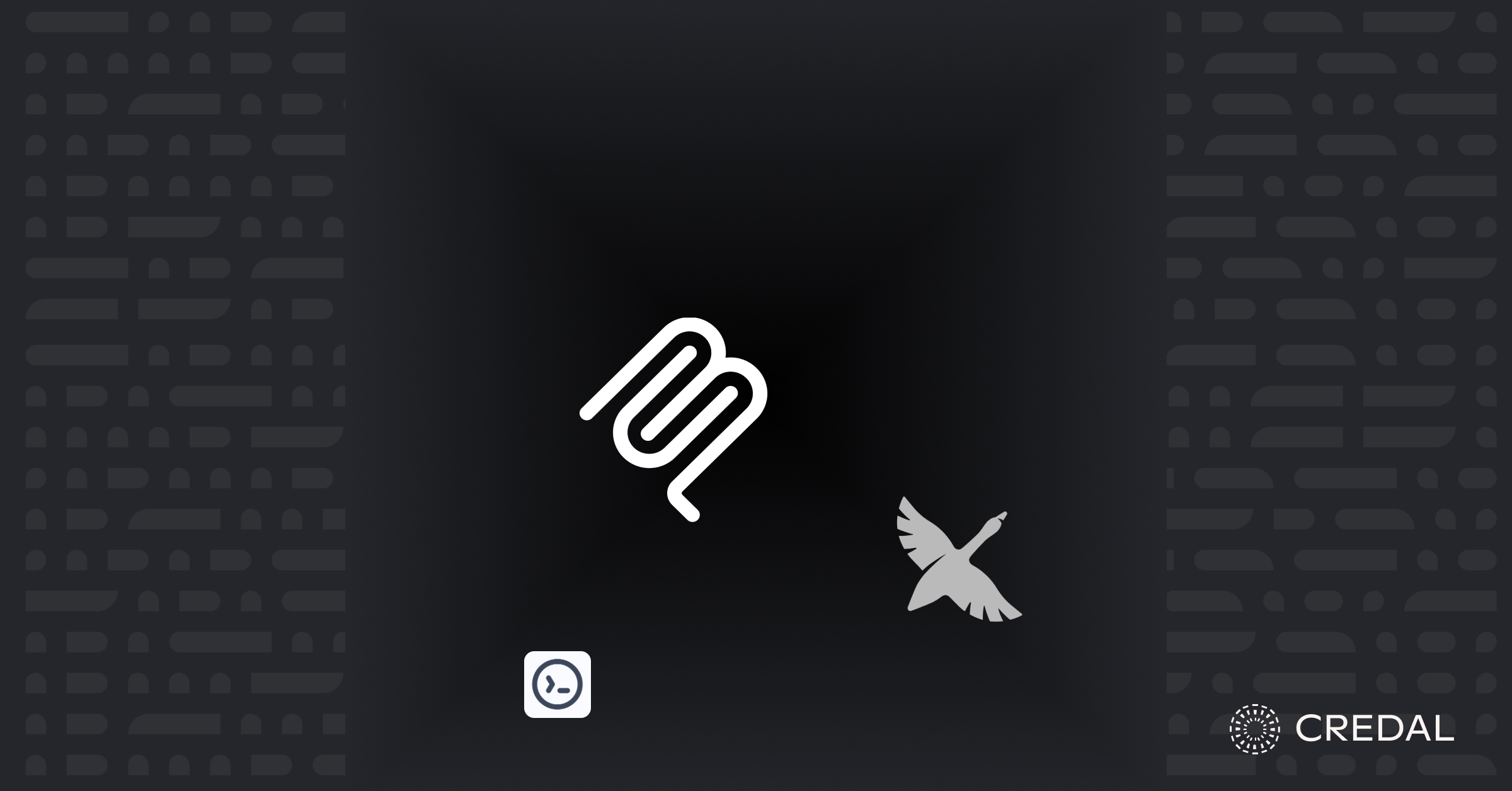
The Agentic AI Foundation (AAIF) is an open-source foundation, structured as a directed fund within the Linux Foundation, that gives neutral governance to the core open standards behind AI agents. It was announced by the Linux Foundation in December 2025 with three founding projects: Anthropic's Model Context Protocol (MCP), Block's goose and OpenAI's AGENTS.md. The name is sometimes written "Agentic Artificial Intelligence Foundation", and AAIF is the standard abbreviation. Current projects and members are listed on the AAIF website.
This guide explains what the AAIF is, what each founding project does, why open governance matters for AI agents, and what it means if your company is adopting MCP and agents.
The AAIF supports and advances agentic AI technology: AI that can take action, reason about context, work with other agents and connect to real tools and data. Rather than building a product, it hosts open-source projects and standards under a neutral, transparent governance structure. It was created to:
Anthropic, Block and OpenAI are the founding contributors, each donating one of the three launch projects. The Platinum members, who hold seats on the governing board, are Amazon Web Services, Anthropic, Block, Bloomberg, Cloudflare, Google, Microsoft and OpenAI. Since launch the foundation has added projects, including agentgateway, an open gateway for MCP, A2A and LLM traffic, and the Agent2Agent (A2A) protocol in August 2026.
Dozens of companies sit at the Gold level, including Adobe, American Express, Cisco, Datadog, Docker, IBM, JPMorgan Chase, Okta, Oracle, Red Hat, Salesforce, SAP, ServiceNow, Snowflake, Stripe, Visa and Wells Fargo. Silver members include Atlassian, Hugging Face, Mistral AI and Zapier. Membership changes often, so check the AAIF members page for the current list rather than relying on any article, including this one.
Anthropic released MCP in November 2024. It has become a widely used standard for connecting AI models to tools, data sources and applications, giving AI systems one consistent way to reach external APIs. Thousands of MCP servers now exist, and MCP is supported across major AI products including Claude, ChatGPT, Cursor, Gemini, Microsoft Copilot and VS Code. New to it? Start with what MCP is and how enterprises should think about it.
goose, developed by Block (the company behind Square), is an open-source, local-first framework for building AI agents. It uses MCP as its standard layer for connecting to tools and data.
AGENTS.md is a simple, open format: a markdown file in a code repository that tells AI coding agents how the project works, such as how to build it, how to test it and which conventions to follow. Because many tools read the same file, agents behave more predictably across codebases and tools.
Agents can make decisions, take actions and coordinate across many systems, which brings real growing pains:
For companies adopting AI agents, the AAIF is good news in three ways:
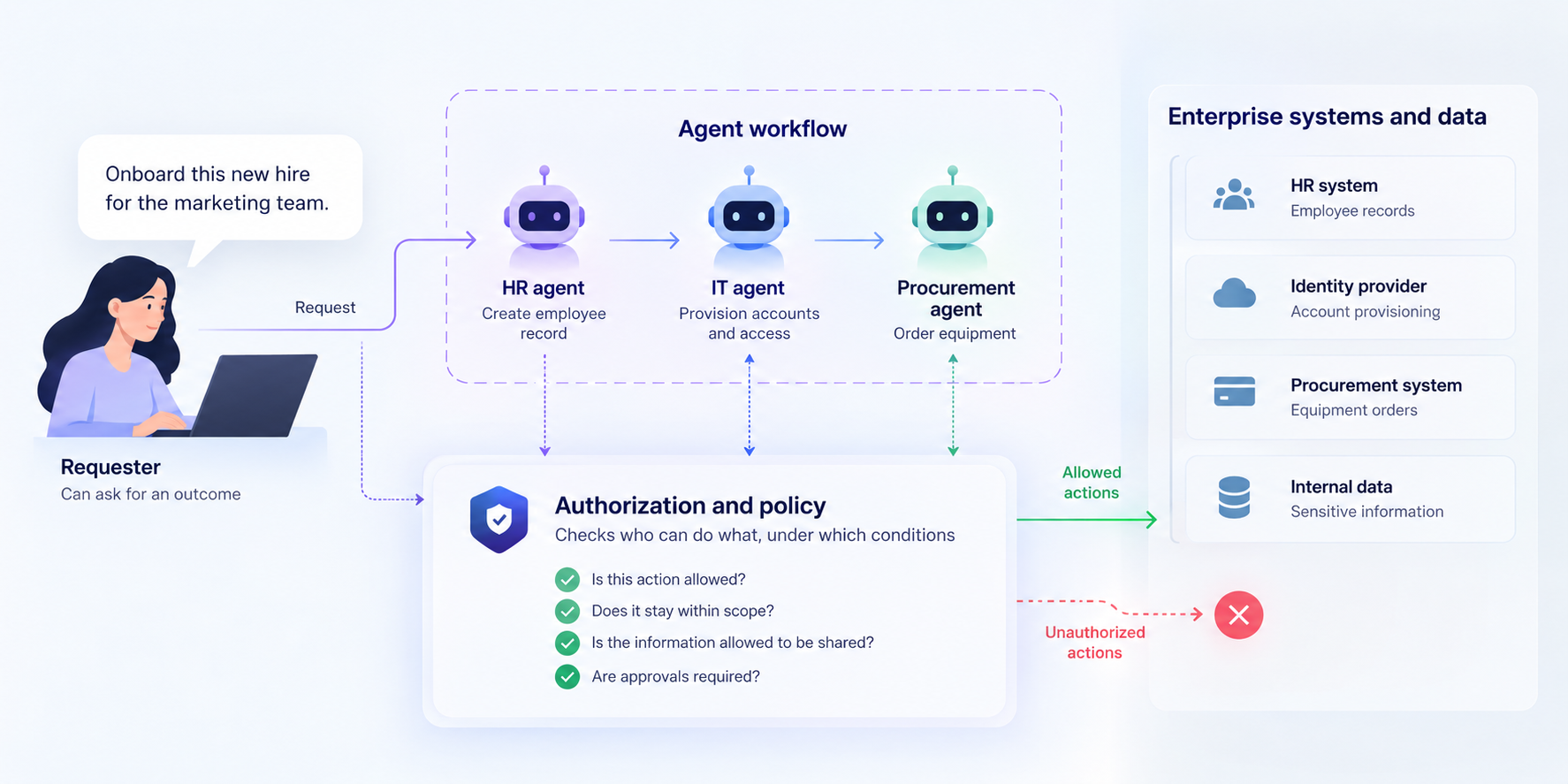
Open standards make agents interoperable. They don't decide who in your company may use which tool, which actions need approval, or where the audit trail lives. MCP is deliberately open-ended on those questions, which is why enterprises add an MCP gateway and a central MCP registry on top of the protocol. For how the risks differ from traditional APIs, see MCP vs API security.
Credal's MCP Platform is the governance layer for MCP in the enterprise. It sits between agents and your systems, ties every tool call to a user through SSO, inherits permissions from source systems, applies approvals and deny-lists to sensitive actions, and consolidates audit logs across Claude, ChatGPT, Cursor, Slack and your own apps. Gateways are becoming part of the open stack too, with the open-source agentgateway now an AAIF project, and as standards like MCP mature, a control layer like this is what lets a company use them safely. Get a demo to see it on your stack.
AAIF stands for the Agentic AI Foundation, sometimes written as the Agentic Artificial Intelligence Foundation.
A directed fund within the Linux Foundation that provides neutral governance and a shared home for open standards and projects behind AI agents.
The Linux Foundation announced it in December 2025.
Anthropic, Block and OpenAI contributed the founding projects: MCP, goose and AGENTS.md. Other projects have joined since, including A2A in August 2026. The AAIF website lists the current project set.
It acts as a neutral steward rather than a vendor. It provides governance and a home for open projects. For how technical decisions are made, look at each project's own governance, since each keeps its own maintainers and process.
MCP was created by Anthropic and donated to the AAIF as a founding project, so it is now stewarded under neutral governance rather than by one company.
Yes, since August 2026. A2A (Agent2Agent) was not one of the three founding projects, but it joined the AAIF as a hosted project and keeps its own maintainers and technical direction. It was introduced by Google and previously hosted by the Linux Foundation. See A2A explained: what it is, A2A vs MCP and whether it's dead for more.
No. MCP is a connection standard, not a security model. Companies still need per-user identity, inherited permissions, approvals and audit logging, usually enforced through an MCP gateway.
Companies join at the Platinum (limited to eight seats), Gold or Silver level, with Silver dues based on employee count, and approved non-profits, universities and government entities can join free as Associate members. Linux Foundation membership is a prerequisite for Silver. See the AAIF members page for current levels and how to apply.

One platform for all agents. Full visibility for admins, full access for teams.

One platform for all agents.
Full visibility for admins, full access for teams.